Sump Pump Systems with a Built-In Float Switch

Sump pumps with a built-in float switch turn themselves on and off automatically as water rises and falls, so your basement, crawl space, or pit stays dry without manual switching. Every pump in this collection has an integrated automatic float, no separate tethered switch to wire or snag. Choose by pit size, switch-on depth, and horsepower for reliable, hands-off drainage. All models ship free.

How a Built-In Float Switch Works

A sump pump with a built-in float switch senses the water level in the basin and starts itself, so nobody has to be standing there when the pit fills. Three switch designs are in common use and they are not interchangeable.

A tethered float hangs on a cord and swings up as the water rises. It needs the most room, so it suits wide basins of 14 inches or more, and it gives a long draw-down between starts.

A vertical float rides on a rod inside a narrow cage. It needs far less clearance, which is why it goes into tight pits, but it cycles more often because the on and off points sit close together.

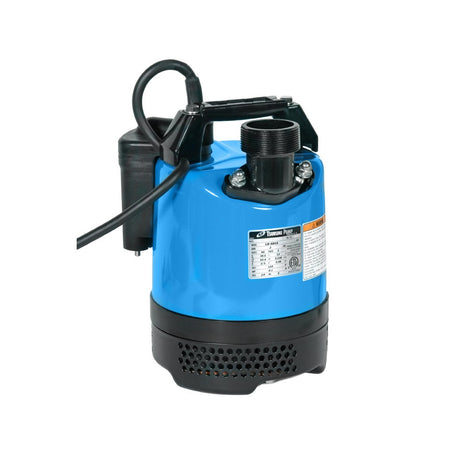
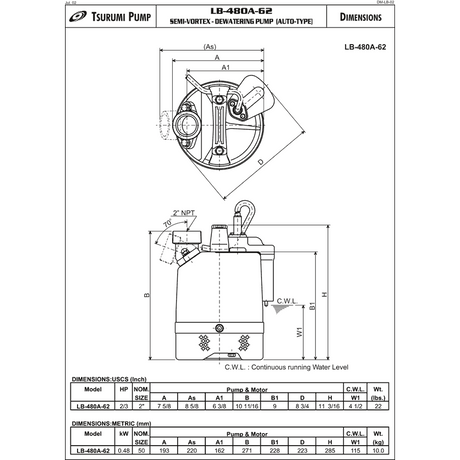
An electronic float sensor has no moving arm at all. Electrodes detect the water and switch the motor, so there is nothing to snag on the pit wall or the discharge pipe. Every pump in this collection uses electronic sensing. That is why the Tsurumi LB-480A drops into an elevator pit only 7-5/16 inches across, and why the HSE2.4S starts on 6-3/4 inches of water.

Match the switch to the pit before you match the horsepower. A tethered float in a narrow basin will hang up on the discharge pipe and run the motor dry, and that is the most common sump pump failure we are called about.

Choosing a Sump Pump System by Pit Size and Duty

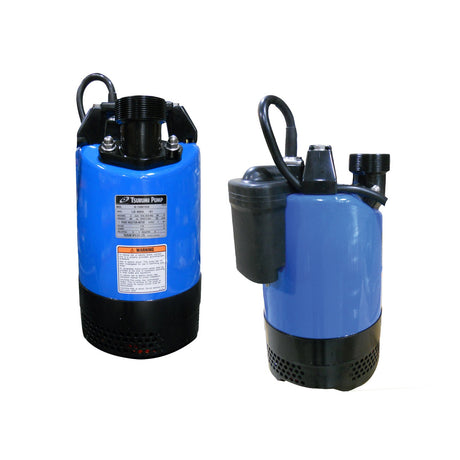
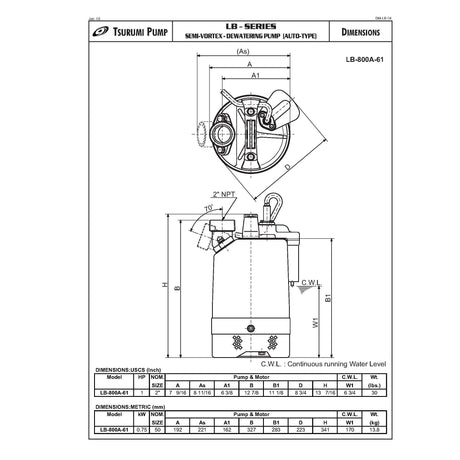
For a residential basin under 10 inches wide, the Tsurumi LB-800A is built to fit an 8 inch pit and carries 50 feet of cable, so the outlet does not have to sit beside the sump.

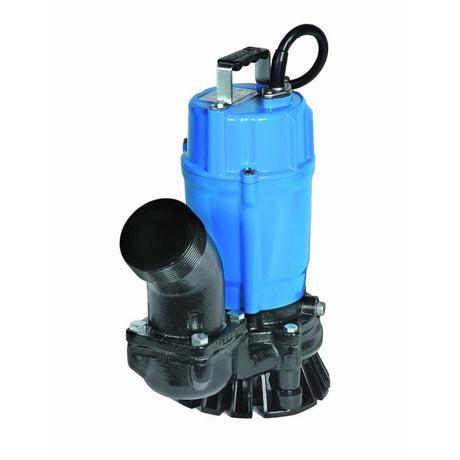
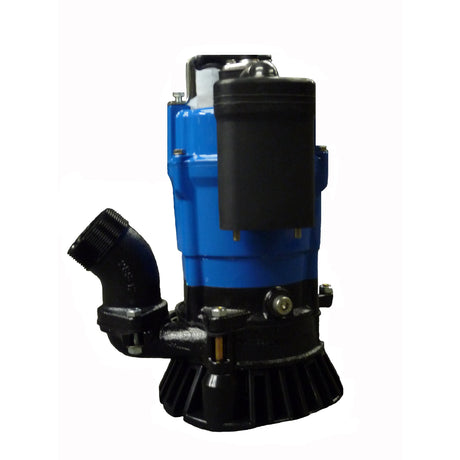
For general basement duty, the HSE2.4S at 1/2 HP and 25 pounds is the lightest unit here to pull and service.

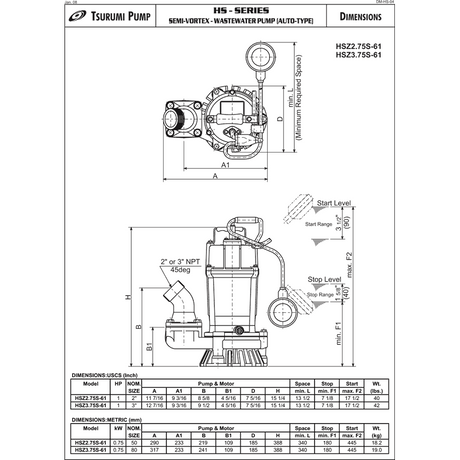
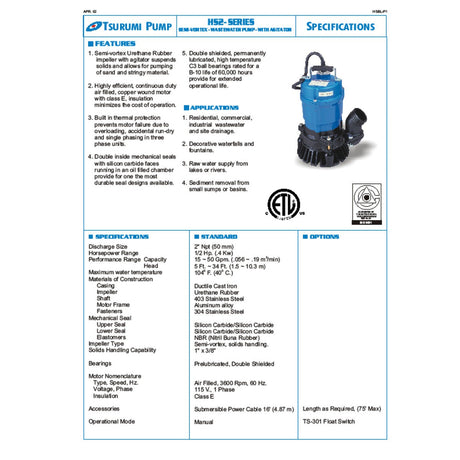
For dirty water with suspended solids, the HS3.75S adds a shaft-mounted agitator that keeps grit moving instead of letting it settle, and its 3 inch discharge bore clears more volume than a standard 2 inch outlet.

Where there is no pit at all, the LSRA2.4S pitless sump pump takes standing water down to 3/16 of an inch off a flat floor.

Every pump in this collection runs a double inside mechanical seal with silicon carbide faces. That seal is what decides whether a sump pump survives continuous duty or fails in its first wet season.

(5 products)

Sump pumps with a built-in float switch turn themselves on and off automatically as water rises and falls, so your basement, crawl space, or pit stays dry without manual switching. Every pump in this collection has an integrated automatic float, no separate tethered switch to wire or snag. Choose by pit size, switch-on depth, and horsepower for reliable, hands-off drainage. All models ship free.

How a Built-In Float Switch Works

A sump pump with a built-in float switch senses the water level in the basin and starts itself, so nobody has to be standing there when the pit fills. Three switch designs are in common use and they are not interchangeable.

A tethered float hangs on a cord and swings up as the water rises. It needs the most room, so it suits wide basins of 14 inches or more, and it gives a long draw-down between starts.

A vertical float rides on a rod inside a narrow cage. It needs far less clearance, which is why it goes into tight pits, but it cycles more often because the on and off points sit close together.

An electronic float sensor has no moving arm at all. Electrodes detect the water and switch the motor, so there is nothing to snag on the pit wall or the discharge pipe. Every pump in this collection uses electronic sensing. That is why the Tsurumi LB-480A drops into an elevator pit only 7-5/16 inches across, and why the HSE2.4S starts on 6-3/4 inches of water.

Match the switch to the pit before you match the horsepower. A tethered float in a narrow basin will hang up on the discharge pipe and run the motor dry, and that is the most common sump pump failure we are called about.

Choosing a Sump Pump System by Pit Size and Duty

For a residential basin under 10 inches wide, the Tsurumi LB-800A is built to fit an 8 inch pit and carries 50 feet of cable, so the outlet does not have to sit beside the sump.

For general basement duty, the HSE2.4S at 1/2 HP and 25 pounds is the lightest unit here to pull and service.

For dirty water with suspended solids, the HS3.75S adds a shaft-mounted agitator that keeps grit moving instead of letting it settle, and its 3 inch discharge bore clears more volume than a standard 2 inch outlet.

Where there is no pit at all, the LSRA2.4S pitless sump pump takes standing water down to 3/16 of an inch off a flat floor.

Every pump in this collection runs a double inside mechanical seal with silicon carbide faces. That seal is what decides whether a sump pump survives continuous duty or fails in its first wet season.

Sump Pump System FAQ

How do I know if my sump pump float switch has failed?

The two signs are a pump that runs constantly and a pump that never starts while the pit is full. On a mechanical float, check first for a float arm caught on the pipe or the basin wall. On an electronic sensor like the ones used here, clean the electrodes; iron bacteria and scale coat them and stop them reading water.

What size sump basin do these pumps need?

Check the diameter figure on each listing against your pit. The LB-480A is 7-5/16 inches across, the LB-800A is designed to drop into an 8 inch pit, the HSE2.4S is 10-1/16 inches, and the HS3.75S is 12-15/16 inches. Leave clearance around the body so the sensor reads a settled water level.

Do I still need a backup sump pump if the float switch is built in?

Yes. A built-in switch removes the manual step, it does not cover a power cut or a failed motor. A battery or water-powered backup on a separate discharge is standard practice anywhere a flooded basement is expensive.

Why does my sump pump cycle on and off so often?

Short cycling almost always means the on and off points are too close together, which happens in a narrow basin or with an oversized pump. Move to a larger basin, or to a pump whose switch has a wider draw-down. Constant cycling wears the motor and the seal far faster than long runs do.